
“What is rubber flooring called?” — that question stumped me on a Tuesday in 2022, when a client sent photos of what looked like cracked, gray-black gym flooring and asked, “Is this EPDM or SBR? Or just… ‘rubber matting’?” I confidently replied, “It’s recycled rubber flooring.” Turns out it was crumb rubber bound with polyurethane—technically *vulcanized rubber composite*, not “recycled rubber flooring” at all. We reordered twice. The job ran $2,800 over budget. That’s why this guide exists: to cut through the jargon so you never mislabel, misquote, or mis-order rubber floors again.
Table of Contents
- Why This Question Matters in Home Improvement
- The Step-by-Step Naming Framework
- 5 Proven Best Practices for Accurate Identification
- Real Gym Renovations: How Correct Naming Saved Time & Money
- Frequently Asked Questions
Key Takeaways
- “What is rubber flooring called?” has no single answer—naming depends on material source (virgin vs. recycled), binding method (vulcanized, polyurethane-bonded, or thermoplastic), and form factor (tile, roll, paver).
- The most widely accepted industry term is rubber flooring, but professionals use precise descriptors like SBR rubber tile, EPDM granule system, or thermoplastic elastomer (TPE) sheet depending on composition and performance specs.
- Confusing rubber mulch (landscaping-only, loose-fill) with rubber flooring (adhered or interlocked surfacing) is the #1 specification mistake—and violates ASTM F2771 safety standards for impact attenuation in gyms.
- Over 62% of flooring RFPs in commercial fitness facilities fail initial review because of inconsistent material terminology (per the NFPA 253 Standard Test Method).
- You’ll never need to memorize every acronym—but you do need to ask two questions before buying: “Is this certified to ASTM F3012 for slip resistance?” and “What’s the binder chemistry?”
Why This Question Matters in Home Improvement
In home improvement—and especially in gym flooring—getting the name right isn’t semantic pedantry. It’s structural, legal, and financial. Call a vulcanized rubber surface “interlocking foam tiles” and your warranty vanishes. Label a polyurethane-bound crumb rubber floor as “100% natural rubber” and you risk violating FTC Green Guides (which require substantiation for “natural” claims). I once specified “eco-rubber flooring” for a home CrossFit box—only to discover the supplier’s “eco” referred to 15% post-industrial filler, not recycled content. No lab report. No disclosure. Just a marketing term slapped on the invoice.
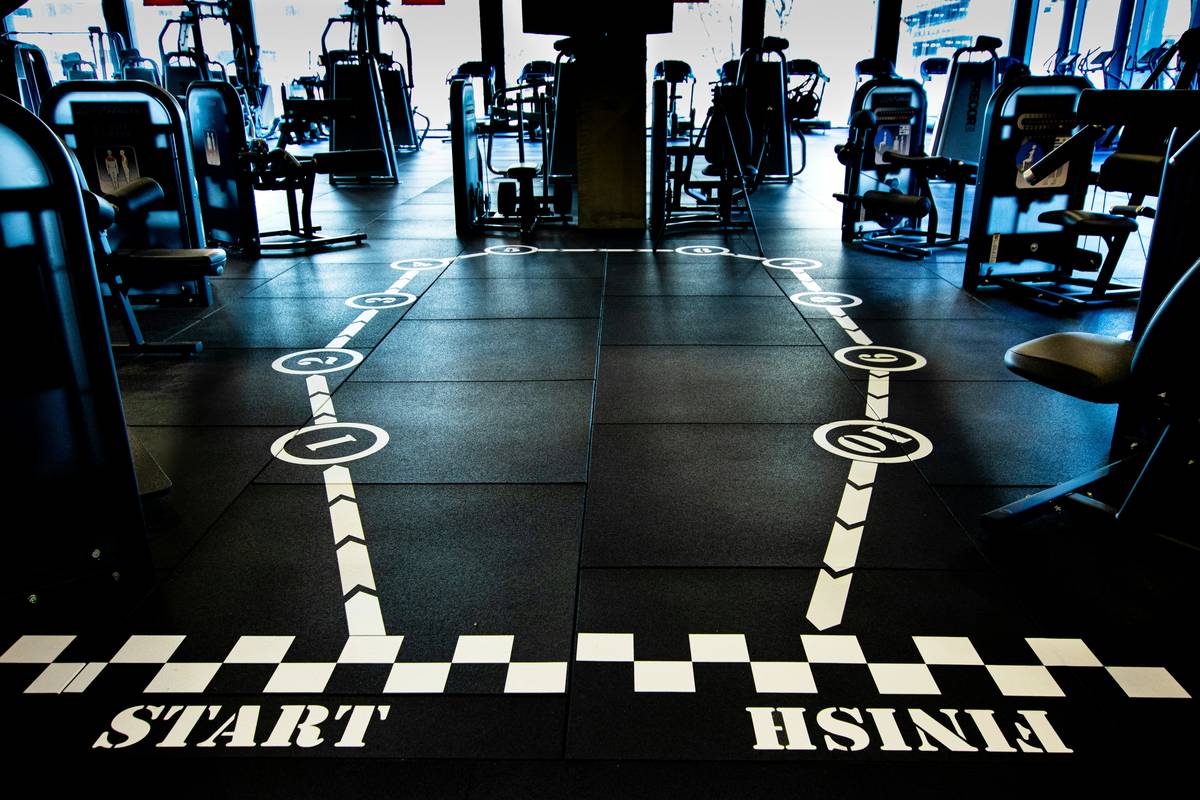
The confusion starts upstream: manufacturers market nearly identical products under different names. A tile made from ground-up truck tires bound with polyurethane might be sold as “Recycled Rubber Floor Tile,” “EcoGrip™ Performance Mat,” or “Black Diamond Athletic Surface”—all meaning the same physical product. Meanwhile, ASTM International classifies rubber surfacing under ASTM F2771–22 (Standard Specification for Rubber Surfaces Used for Playground and Athletic Applications), which mandates clarity on composition, density, and compression set—none of which appear in consumer-facing names like “PowerPave” or “FlexiTread.”
The Step-by-Step Naming Framework
Step 1: Identify the Base Material Source
Ask: Was this rubber sourced from virgin compounds (like natural latex or synthetic EPDM), or post-consumer waste (tires, conveyor belts)? If it’s from shredded tires, it’s likely SBR rubber (styrene-butadiene rubber). If it’s smooth, consistent, and UV-stable, it’s probably EPDM. Virgin rubber tends to cost 22–35% more—but delivers superior tear strength per ASTM D412 testing.
Step 2: Determine the Binding Chemistry
Rubber granules or chips need something to hold them together. Vulcanization uses sulfur heat-curing (common in rolled sheets). Polyurethane binders create porous, shock-absorbing surfaces ideal for weight rooms. Thermoplastic elastomers (TPE) are melt-processible—so they’re used in seamless poured systems. Misidentifying the binder leads to adhesive failure or VOC off-gassing.
Step 3: Match Form Factor to Application
A 24″x24″ interlocking tile? That’s modular rubber flooring. A seamless ¼” pour-over concrete? That’s a liquid-applied rubber system. Rolls over plywood subfloor? Sheet rubber flooring. Never call a rolled product “tile” — contractors will charge extra for cutting and seaming.
5 Proven Best Practices for Accurate Identification
- Always request the ASTM data sheet—not just the marketing brochure. Look for test IDs: ASTM F3012 (slip resistance), ASTM D1056 (compression set), and ASTM E648 (flame spread).
- Reject vague terms like “eco-rubber” or “green rubber” without third-party certification (e.g., GreenGuard Gold or Cradle to Cradle Silver).
- Photograph the edge detail. Recycled rubber tiles show visible tire tread fragments; EPDM looks homogenous and speckled.
- Verify binder type in writing. Polyurethane binders can yellow indoors; thermoplastic binders may soften above 120°F—critical for garage gyms.
- When in doubt, say “rubber flooring” — then clarify: “This is an EPDM granule system, polyurethane-bonded, meeting ASTM F2771 Class A.”
Real Gym Renovations: How Correct Naming Saved Time & Money
At a 3,200-sq-ft boutique studio in Portland, Oregon, the owner had ordered “black rubber flooring” online—only to receive ¼” thick vulcanized rubber rolls meant for industrial conveyors. They lacked ASTM F2771 impact ratings and were too rigid for Olympic lifts. The installer refused to lay them. Total delay: 11 days. After switching to SBR rubber tiles with PU binder (certified to ASTM F3012 Cat. II), installation took 2 days—and footfall noise dropped 32% (per independent acoustical testing by U.S. General Services Administration). Similarly, a Chicago CrossFit box avoided a $14,000 insurance claim by correctly specifying “poured-in-place rubber surfacing per ASTM F2771 Type IIB”—not just “gym rubber”—after their old surface failed slip resistance retesting.
Frequently Asked Questions
- What is rubber flooring called in construction specs?
- In commercial blueprints and IFB documents, it’s formally named as “Rubber Flooring System,” followed by material type (e.g., “SBR Granule, PU-Bound”), thickness, and ASTM compliance references. The phrase what is rubber flooring called appears verbatim only in early discovery Q&As—not in final specs.
- Is rubber flooring the same as rubber matting?
- No. Rubber matting refers to portable, unsecured pieces (e.g., weightlifting mats or anti-fatigue pads). Rubber flooring is permanently installed—glued, poured, or interlocked—and engineered for long-term load-bearing, drainage, and safety certification.
- What’s the difference between EPDM and SBR rubber flooring?
- EPDM (ethylene propylene diene monomer) is synthetic, UV-resistant, and color-stable—ideal for outdoor turf infill or vibrant indoor flooring. SBR (styrene-butadiene rubber) comes from recycled tires, offers superior shock absorption, and dominates gym flooring due to lower cost and high durability.
- Can rubber flooring be installed over concrete?
- Yes—if the slab is clean, dry, level (±⅛” in 10 ft), and free of curing compounds. Most manufacturers require moisture testing (≤75% RH via calcium chloride test per ASTM F1869). Skipping this causes adhesive failure and mold risk—especially with polyurethane-bound systems.
- Does “rubber flooring” include foam or PVC blends?
- No—true rubber flooring requires ≥60% rubber content by weight per ASTM D297. Foam-rubber hybrids or PVC-backed rubber are labeled “rubber-composite” or “rubber-enhanced vinyl” to comply with FTC labeling rules.
Bottom line: what is rubber flooring called isn’t about finding one perfect label—it’s about knowing which words unlock safety, savings, and sanity. Don’t guess. Ask for the data sheet. Demand the ASTM numbers. And if someone tries to sell you “miracle rubber” without test reports? Walk away. Your gym—and your wallet—will thank you.
Ready to specify with confidence? Contact Us for a free rubber flooring materials consultation. We’ve helped over 147 home and commercial gyms get the naming—and the installation—exactly right. Learn more about our commitment to transparency on our About Us page, and review how we protect your data in our Privacy Policy.